Mini & Maxi


🎭 Who Were Mini & Maxi?
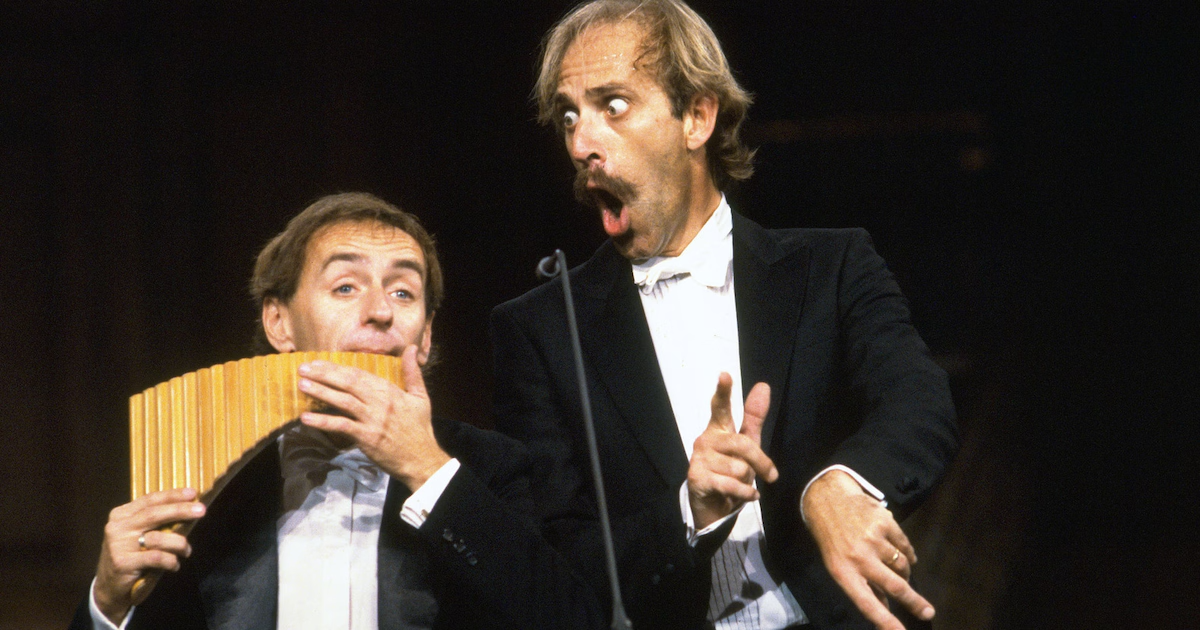
Mini & Maxi were one of the most beloved, inventive, and uniquely expressive duos in Dutch theater history. They blended musical virtuosity, physical comedy, silent storytelling, and perfect timing into a style that felt both universal and unmistakably their own — like modern clowns without makeup who could captivate audiences around the world.
- Karel de Rooij (Mini) and Peter de Jong (Maxi) began working together in 1969.
- They met during the Tom Manders Show: De Rooij was a conservatory-trained trombonist, while De Jong was a self‑taught pianist with a natural comedic instinct.
- Their partnership truly began after an improvised bit during the Gert and Hermien Show — an improvisation the hosts didn’t appreciate, but the audience absolutely loved.
The name Mini & Maxi supposedly came either from the Minimax fire extinguisher brand or from the mini‑skirt fashion trend of the era. Both explanations fit their playful, mischievous spirit.
---
🌍 Breakthrough and Worldwide Success
Throughout the 1970s and early 1980s, they created short sketches for Dutch television, including:
- Mini & Maxi Show (1981)
- Clowns in Gloria (1982)
Their true international breakthrough came in 1984 with the theater production Sprakeloos (Speechless) — a wordless, musical, physical performance that toured the world, even reaching the Soviet Union. It won first prize at the Cannes Theater Festival.
More highlights followed:
- Het Concert (1986, AVRO) – awarded the Silver Rose of Montreux (1987)
- Sorry (1991)
- Scherzo (1994) – winner of the Scheveningen Cabaret Prize
- Split (1998)
In 1999, they received the Johan Kaart Award for their contribution to Dutch theater entertainment.
---
🎪 Major Milestones
- In 2001, they opened the brand‑new Luxor Theater in Rotterdam with their show City, performing for more than 100,000 visitors.
- That same year, they received the first-ever Toon Hermans Award.
- In 2002, they began their anniversary show 35 Years of Theater, but had to stop abruptly due to a severe neck hernia suffered by Peter de Jong.
Although the duo Mini & Maxi officially ended, they continued performing together — including in Waiting for Godot (2004–2005).
---
📼 An Unexpected Farewell
For years, it seemed no official recording existed of their final show — until 2007, when a private home video surfaced, filmed by the father of musical star Pia Douwes. Thanks to that recording, their last performance was preserved after all.
---
✨ Summary in a Beautifully Told Story
In an era when Dutch living rooms still glowed with the soft flicker of black‑and‑white television, two young performers crossed paths backstage at the Tom Manders Show. Karel carried the precision of a conservatory musician; Peter played piano as if he had invented the instrument himself. In each other, they recognized something rare: a shared instinct for timing, for musical humor, for the kind of comedy that doesn’t shout but whispers — and somehow reaches everyone.
Their partnership began with an improvised moment that technically wasn’t allowed, but the audience embraced it instantly. From that spark, Mini & Maxi were born: two clowns without greasepaint, two musicians without words, two men who could make a theater roar with laughter using nothing more than a glance, a gesture, or a single mischievous note.
They carried their silent language across the world. In Sprakeloos, they found their purest form — a poetic choreography of music, movement, and misunderstandings. Audiences in Cannes rose to their feet; crowds in the Soviet Union laughed along without needing a single word of Dutch.
For decades, they kept reinventing themselves. They conducted invisible orchestras, fought musical duels, and coaxed pianos into behaving like living creatures. They won awards, filled theaters, and even opened the new Luxor Theater with a show that drew more than a hundred thousand people.
But the life of a clown is sometimes heavier than it appears. A fall, a neck injury, and suddenly the curtain fell — not with a thunderous finale, but with silence. Fitting, perhaps, for two men whose greatest artistry lived in silence.
Yet their legacy endured. In a forgotten home video, in the memories of millions, in the way they proved that humor doesn’t need words. Mini & Maxi weren’t just performers; they were a language of their own — a language of music, movement, and humanity.
And anyone who ever saw them perform carries that language with them still.